
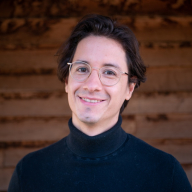
Alfredo Parra 🔸
Bio
Participation4
I'm the Director and Co-Founder of ClusterFree, an advocacy and research initiative focused on cluster headaches. ClusterFree was incubated by the Qualia Research Institute. It hosts and runs ClusterInfo.org.
I previously worked as Chief of Staff at the Institute for Law & AI (formerly "Legal Priorities Project") and as COO at the Center on Long-Term Risk (formerly "Effective Altruism Foundation"). I also co-founded EA Munich in 2015. I have a master's and a PhD in Computational Science from TU Munich and a bachelor's in Engineering Physics from Tec de Monterrey.
I also have a blog called Globally Bound where I write about consciousness and extreme suffering.
🔶 10% pledger since 2015
Posts 17
Comments107
Topic contributions4
Relevant abstract just published in Neurology: DMT use in Cluster Headache: Interim Analysis of an International Survey (S23.003)
From a total 248 completed surveys, 100 participants met criteria for cluster headache. Of these, 84% were male and average age was 49 years. The most common place to have learned about DMT treatment was social media/online. More than one mode of ingestion was often tried, but 75% had used a vape pen. Among those who used DMT to abort attacks (n = 85), the majority reported it completely eliminates pain (67.5%) and that it works every (45.7%) or almost every (35.8%) single time. Over half reported that DMT worked in under 30 seconds, and all participants reported either no change or an improvement in their health with DMT use.
Thanks! Upvoted because I agree that we should consider EI/OI in population ethics, but disagree with the conclusion, which depends on the specifics of how you aggregate the pinpricks. Without going into too much detail, an analogy here is that if you have two soap bubbles and you bring them closer together until they touch, they can merge into a bigger bubble, possibly with emergent properties that go beyond those of the two individual bubbles. It's a new kind of thing, well defined through topology, and having little to no resemblance to the two-separate-small-bubbles system.
Will publish more on this topic soon!
Thanks for sharing! I think you might enjoy in this conversation with Roger Thisdell about classical enlightenment and valence structuralism, which touches on some of the points you raise. (You probably also saw Scott Alexander's In What Sense Is Life Suffering?)
Deep down consequentialism is a judgmental philosophy that evaluates world states as better or worse.
It's going to be interesting to see how the field of ethics (esp. population ethics) evolves as philosophers take phenomenology more seriously (in particular exotic states, many of which Buddhists have explored and described in excruciating detail for centuries), not to mention things like open individualism or mixed valence.
In case it helps, this is (super roughly!) how I think about some of these questions:
- I think panpsychism fares much better than functionalism (generally). It seems odd to me that (many) (computational) functionalists seem OK with claims like "consciousness is simply what certain algorithms / information processing / etc. feel like from the inside" (especially given the arbritrariness of algorithms), yet struggle to see how consciousness could be what the fundamental fields of physics (or whatever is at the base layer of reality) feel like from the inside (those are not arbitrary).
- More precisely, phenomenally bound minds like ours are what certain configurations of the fields of physics, and especially the EM field, feel like from the inside.
- Though as Atai Barkai has very eloquently pointed out, simply stating that the fields of physics are made of qualia (~Russellian monism) does not automatically solve the phenomenal binding problem. But that's a separate (IMO surmountable) problem (and Barkai gives one possible solution).
- I currently think that the Symmetry Theory of Valence, despite being in its infancy, has more explanatory power and is more parsimonious than competing theories of pleasure and suffering.
- Putting panpsychism and STV together paints this (admittedly hand-wavy) picture:
- Any physical system has an associated valence, proportional to its degree of symmetry/asymmetry (consonance/dissonance).
- In the case of human nervous systems, this could be the degree of dissonance present in the spectrum of EM waves that make up our world simulation; see here for more.
- Evolution made use of this low-level fact about the universe to design organisms that feel pleasure when they do things aligned with their reproductive success (and the converse with suffering).
- But this is an imperfect implementation that can be gamed. For example, we can feel lots of pleasure for reasons totally unrelated to our reproductive success (e.g. the jhanas or a good 5-MeO-DMT trip, which STV seems to predict / capture just fine: the phenomenal fields become simpler and more harmonious).
- Any physical system has an associated valence, proportional to its degree of symmetry/asymmetry (consonance/dissonance).
(Not surprisingly, this position is very QRI-informed.)
Some women on the Facebook support group "Cluster Headache Patients" comparing labor pain to cluster headache pain:
- "Honestly, I had a natural childbirth and a cesarean and cluster headaches are 10 times worse than both."
- "2 unmedicated births for me. Would rather do that every day than have another cluster"
- "every day though, really?"
- "yes. I'd rather go through childbirth without pain relief than CH."
- "tenfold worse than popping a baby out"
- "Nah, labour/giving birth is a walk in the park compared to ch […] I was in labour with my son for nearly 3 days, then the midwife had to break my cervix with her hands, but I'd still rather do that again than have another CH"
- "Labor pain doesn’t even come close to CH! I’d choose labor pain ANY day over suffering from another CH"
- "CH is a million times worse"
- "I had 4 children, 3 were natural. CH is worse."
- "I'd rather have a baby. And my placenta tore during all natural childbirth."
- "I gave birth to 4 different babies. The smallest being 8lbs 14oz. The biggest being 10lbs 15oz. I would much rather give natural birth all over again than a CH."
- "I've had three babies—one was overdue and born with his arm over his head. Having a baby is still cake compared to clusters."
These are just a few. They go on and on. (So far only one woman claiming childbirth was worse, who "nearly bled out in childbirth, got an episiotomy with zero freezing/drugs.")
Looking for medical reviewers (paid) and translators (volunteers) for ClusterInfo.org
A couple of months ago, my team launched ClusterInfo.org, a website hosting high-quality guides on how to treat cluster headaches. We're hoping to help thousands of patients around the world find treatments (and get a diagnosis) as quickly and easily as possible.
I'm looking for medical doctors willing to appear as medical reviewers for any of the guides (similar to here). Reviewers would be paid $300 per guide.
Also, the website is available in 8 languages: English, German, Spanish, French, Italian, Polish, Portuguese, and Finnish. Some of the guides still need to be reviewed by native speakers. Get in touch if you'd be excited to volunteer for this task, and help us reach more patients.
You can contact me via email.
Thank you!