
Catherine Low🔸
Bio
I'm one of the Community Liaisons for the EA community (alongside Julia Wise, Charlotte Darnell, and Jonathan Mannhart).
I'm a contact for community health support for EA groups, and I also works on assessing and mitigating risks to the EA community.
I initially studied a lot of physics, then was a high school teacher for 11 years before moving full time into EA community building. I ran local and national EA groups and worked on EA outreach projects, before joining CEA’s Groups Team in early 2020 to support EA groups worldwide. I started working for the Community Health team mid 2021.
Posts 24
Comments138
If you're an EA community organiser, you are also most welcome to contact me (Catherine from CEA's Community Health team) if you've got any questions or concerns about the potential impact of this series on your local community. Our team might be able to brainstorm ideas with you and provide some advice.
Good push back Hazem!
Definitely some in the https://forum.effectivealtruism.org/groups are inactive, but there are also groups that haven't put their details on this page, so it is hard to know. But on reflection my
> maybe a couple hundred EA University groups
is probably on the high side!
Some other numbers we know
- CEA currently has 72 university groups in the Organiser Support Program (the team are interviewing new organisers right now, so this number will probably increase soon)
- I was mostly anchored on the last time CEA did a detailed group census - and 200 uni groups was the ball park then. But now I look at it this was back in Dec 2022 so my anchor is really out of date.
https://forum.effectivealtruism.org/posts/aetatCMGqcAPsNbLs/growth-and-engagement-in-ea-groups-2022-groups-census
299 EA groups [...] indicated that they are active.
Out of the active surveyed groups 150 were university groups and 25 were university/city hybrid groups.
Based on our records, we estimate that ~63 active EA groups (17% of all active EA groups) did not complete the census.
Hi Hazem, I'm Catherine from CEA (and a former group organiser).
I think is it really great idea to give LLMs context about running EA groups generally, and about your own EA group.
And thanks for linking to CEA's Organiser Support Programme!
I just wanted to correct one thing:
apparently, there are currently only seven "established" EA uni groups (established means very active if I understand correctly)
I believe there are maybe a couple hundred EA University groups around the world and CEA has has supported dozens of these groups in the last year (sorry I don't have accurate numbers at my fingertips!). The website you linked is just the group supported by the NEST programme. There is no good up to date list of active groups, but this https://forum.effectivealtruism.org/groups has a lot of groups - some active some dormant.
But I agree with the point you made that
Too often, uni groups die
and that succession planning is important. And LLMs could help with that a lot!
I'd really like it if AI resulted in amazing plant based or cultured meat, and that the general abundance coming from AI means that people can focus their thinking on morality, not just making their lives go okay.
BUT, so far, new tech and improved economical situations have caused farmed animal suffering to get worse.
So I have a big uncertainty, but lean disagree.
Hi Yarrow, thanks for looping back on this.
Yes, we did do this project, which involved looking at existing data and doing some new interviews with community members, and looked at existing literature on women and non-binary people's experiences in different communities, and what seems to improve things. Based on all this, we wrote an extended internal document, and shared some recommendations with a variety of EA organisations and EA groups. We think this information could be of use to more community members, but for some bureaucratic reasons a writeup hasn't made it on to the Forum - sorry about that.
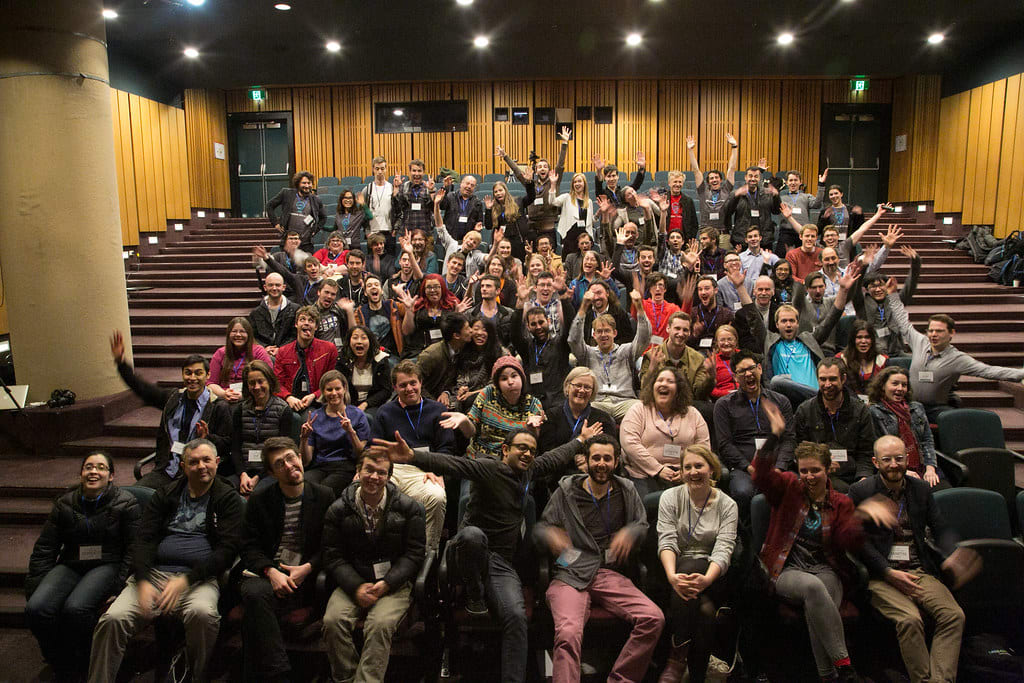
I look back fondly to 10 years ago at EA Global: Melbourne. It was small, simple, the catering was (literally) carrot sticks, corn chips and hummus, and it hugely influential to me. I knew no one before I arrived, but the conference photo shows many people I've gone on to work with and become close friends with.
This talk was a highlight - I remember it bending my mind in ways it hadn't been bent before, and it hammered home just how hard our mission to improve the world actually is:
Hi Laura,
We know that this has been a difficult experience for you.
I'll give some information publicly here and also send a message privately to you. As you may be aware there are some constraints about what we can share publicly.
I can assure you that our team has reviewed all the information you've sent us very carefully, and taken that information into account. As I’ve previously said to you, we’re open to revisiting our decisions if you have new information to send us.
On the Community Health team’s role
We’re no longer sharing private information outside of CEA
In the past some EA organisations (including EA groups) could come to us about people they were thinking of giving opportunities to. If we had any information relevant to the opportunity that we had permission from the source to share, we might pass that information on. We no longer do this and we haven't done so for over a year. This sharing was so that community leaders could make more informed decisions about who to give what opportunities to, with the aim of improving the wellbeing and impact of the whole EA community - not just CEA spaces.
We knew it was possible that people may feel pressured to take certain actions because of the information we shared, but we tried to reduce that risk through steps like making it clear that the final decision was theirs. Often we’d offer advice on multiple ways they might handle the situation, like how they might reduce downsides if they did offer the opportunity.
As Laszlo commented, the 2024 EA Germany summer camp organisers chose to give us a list of applicants and we did pass on some information about Laura. We explicitly told the organisers that it was their decision, and that if they chose to go ahead with offering the opportunity, there might be ways to reduce risk and we're available to help brainstorm ideas. But it is very possible that we still made the organisers feel pressured to make a particular decision.