
In Summary
- As part of Marginal Funding Week we would like to explain how FE would use additional funding to increase our impact in 2027, beyond what we have already committed, and why now is an important moment for support.
- First Embrace supports the delivery of Kangaroo Care for newborns born too small or too soon in Northern Nigeria in partnership with public hospitals. We were incubated by Ambitious Impact.
- GiveWell considers Kangaroo Care neglected in the places where it is needed, and highly cost-effective. Unlike most global health interventions Kangaroo Care requires no equipment or commodities because it leverages human behaviour. We estimate our work averts a newborn death for around $4,000 and that this will reduce to around $3,000 in 2027.
- Replicating GiveWell’s methodology, we estimate mortality among premature and underweight newborns in Nigeria is around 18%. Since February we have cared for 1,094 such newborns. 90% of them survived the neonatal period.
- We have raised half of our $1.2 million budget for 2027.
- We think this is a strong place for a marginal donation right now because:
- UNICEF reports that neonatal mortality in Nigeria has not improved in the last decade.
- Estimates suggest that only 5% of newborns who need it receive Kangaroo care in Africa. To our knowledge we are the only organisation working with the government to bring Kangaroo Care to scale in the state we work in.
- Funding is the main limiting factor we have to increasing our impact. We plan to engage with relevant institutional funding opportunities in Q1 2027. Available evidence illustrates that implementation track record and organisational development are key evaluation factors for these organisations. We are confident that generating evidence of geographical replicability of our work and making a senior hire could catalyse this funding. In view of trends in the landscape in the effective giving landscape that are already taking place and are anticipated, we believe the near-term importance of this has increased significantly.
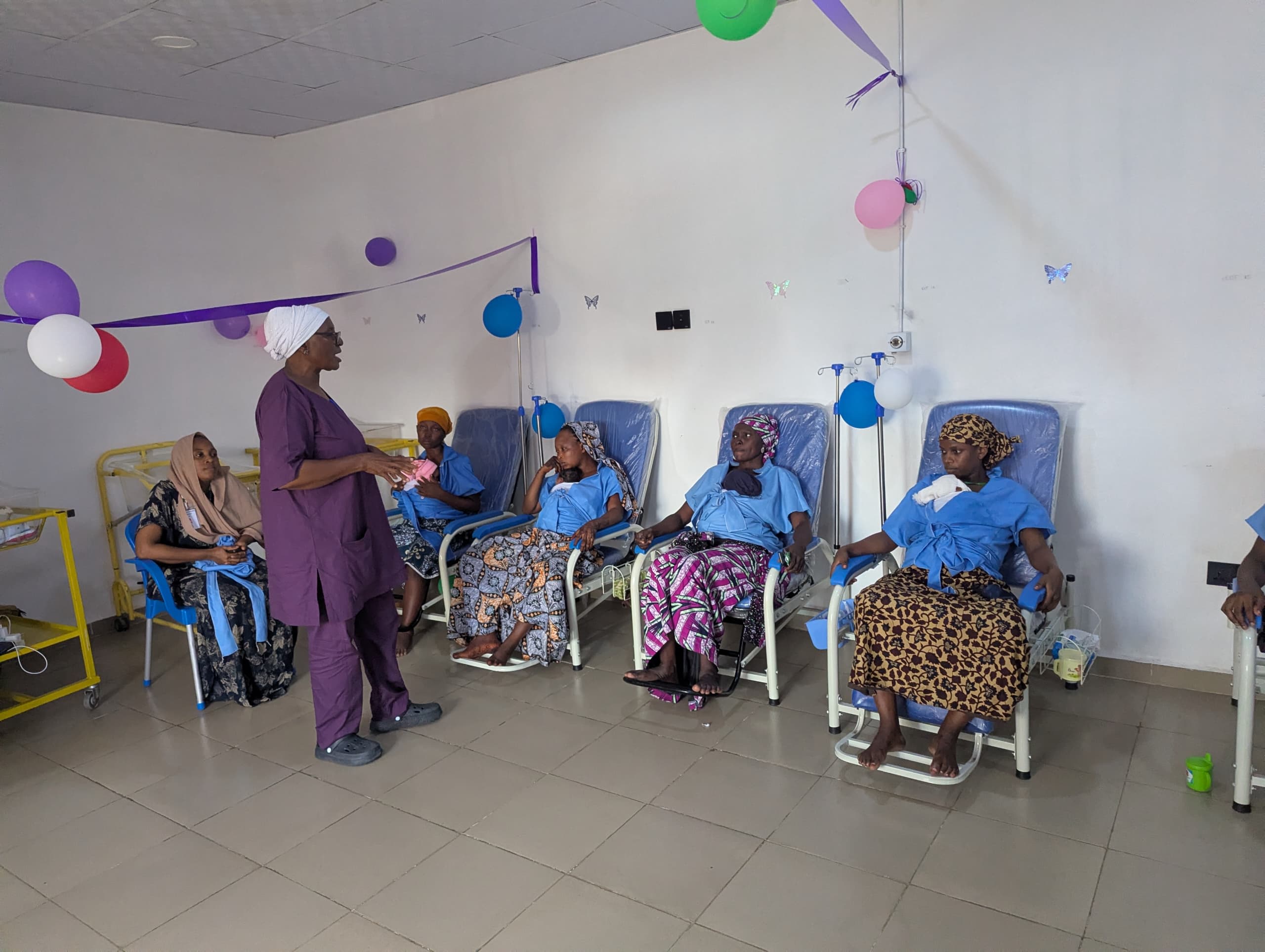
Why this?
Nigeria has the world’s second-highest newborn death toll (277,000 per year). Here, survival for all children is improving, except for newborns. 78% of newborn deaths are in newborns born too soon or too small, despite them comprising only 15% of births.
Kangaroo Care is proven (22 randomised-controlled trials, 33% average mortality reduction), cost-effective and neglected. This is despite its recommendation by the WHO as the standard of care for vulnerable newborns and the Nigerian government’s 95% coverage target by 2030.
Results
Since February 2026 we have cared for 1,024 premature and low birth weight newborns. 96% received Kangaroo Care. Of the babies who have reached day 28 already and we have followed up (826), 90% survived. We are partnered with 2 hospitals, with two more being prepared to begin co-implementation by the end of 2027.
How cost-effective is this?
| Stage | $ / life saved | $ / DALY | Hospitals |
|---|---|---|---|
| Observed (Nov 25-26) | $4,159 | $83 | 2 |
| 2027 plan (two states) | $3,239 | $65 | 15 |
More detail can be found in our CEA and the reach-and-cost model.
What is the gap?
Our budget is $1.2m for 2027, of which we have raised $605,000. Above this we believe marginal funding would be better directed towards other organisations.
The remaining gap allows us to de-risk many important elements of our work: including geographical replicability of our model across regions and execution of senior hiring.
What does funding buy?
$2,000 trains a cohort of new nurses, readying them to support Kangaroo Care at a new hospital.
$50,000 covers a hospital's program costs for a year, bringing Kangaroo Care to up to 1,000 vulnerable newborns.
$70,000 allows us to hire a senior Nigerian country director to lead our subnational and national government work. We believe this will improve our ability to leverage opportunities opening up in Nigeria's peri-election period to embed government adoption through co-financing agreements.
Why now?
We think support now is likely to be catalytic. Before we are reviewed by institutional funders in 2027, reaching a second state and making our first senior hire will directly address risks that these partners are likely to have about our organisation (see here and here for some examples).
As it appears the amount of funding available in the space will increase this year, with many suggesting this may accelerate, opportunities for counterfactual impact in 2027 may be much larger than we previously anticipated.
Beyond this, the faster we are able to expand our programs the more avoidable newborn deaths we will be able to avert.
Open Questions
Exact counterfactual newborn mortality? This is the number our whole case rests on most. Our 10% compares positively to 18% nationally which we estimated by replicating GiveWell’s methodology. The exact counterfactual is the pre-intervention mortality rate in hospitals we work in. In the hospital baselines we have collected mortality among eligible newborns was 17% and 26%, but these are small samples over limited time periods.
Senior Hiring? Our budget assumes we are able to hire senior staff sufficiently quickly, who are both value aligned and technically capable of helping us to scale our impact significantly next year. Ideas on how to derisk this would be welcome.
Speed of expansion? Our plan depends on hiring and onboarding staff and building working relationships with hospital management fast enough to maintain program fidelity as we reach more newborns. We have fidelity benchmarks to consider in realtime if the pace of our expansion is appropriate.
How to support
You can give directly through our every.org page, which accepts donations up to $20,000. For larger support, email [email protected]. All donors will receive a detailed report about what their funding helped to achieve for vulnerable newborns and our periodic newsletter.
We welcome questions in the comments. Thank you for reading this and supporting our work to end preventable newborn deaths in Nigeria.