

TLDR:
- We built an evidence- and philosophy-driven model for allocating philanthropic resources across causes.
- Last May, we launched the Cross-Cause Fund (CCF): a high-impact giving fund that allocates donors’ contributions based on the model's results. The fund is a pooled DAF at Charityvest, advised by RP at no fee, and has moved over $700k since its inception across GHD, AW, and GCRs (with more causes potentially to be added soon).
- We believe the CCF, with its underlying model, is currently the most rigorous, comprehensive vehicle for giving across causes and for giving under moral uncertainty. We also know its limitations, which we lay out below.
- Today, we share our ambitions and plans to improve it over the next year. We believe it’s a crucial tool for effective giving, especially as the community prepares for a new wave of philanthropic resources.
- We invite you to read the methodology and the plans, red-team them, and give us the criticism (see the last section of this post) that will make this a tool the community can use as a default way to decide where to give, or a component of portfolio diversification.
What we’ve built so far
- We’ve built a cross-cause prioritization model that:
- Is based on years of our philosophical and quantitative modeling research. Our staff has authored several sequences that produced decision-relevant outputs: The Moral Weight Project, the CRAFT sequence, and the Portfolio Builder and Moral Parliament tools. We also produced the CURVE sequence, which featured tools for reasoning about how risk attitudes, time discounting, and empirical uncertainty could affect cause prioritization.
- Combines empirical and philosophical components in its methodology, along with the surrounding uncertainty. While we’ve already identified some limitations and possible course corrections, both the initial methodology and our plans to improve it (see below) remain open to investigation and critique.
- We’ve also launched the Cross-Cause Fund, a high-impact giving fund whose allocation relies on that evolving model.
- Since its inception in May, the fund has distributed over $700k to high-impact funds across GCRs, AW, and Global Health.
- Legally, the Cross-Cause Fund is a Donor-Advised Fund (DAF). All donor contributions go into a single pooled account held at Charityvest, which is advised by RP.
- On a regular basis, we make grant recommendations to beneficiary funds based on our model’s current recommended split.
- We don’t charge any fees for managing the CCF. 100% of donations are directed to the recommended funds.
- Rethink Priorities is the only organization in the EA space, and, to our knowledge, in the broader philanthropy space, doing rigorous, methodical cross-cause prioritization research.
- We are a cause-neutral organization with 30+ multidisciplinary researchers on staff and 8 years of experience in leading this type of prioritization research.
- Our 2025 landscaping research on prioritization showed that we were one of two organizations in the broader effective altruism community doing research on cross-cause intervention prioritization. The second organization (Global Priorities Institute) has since closed.
Why cross-cause prioritization is so important to us, for this community and for the upcoming wave of philanthropy
- Rethink Priorities’ vision for the CCF is to help donors, foundations, and philanthropists allocate resources responsibly across different types of interventions that save lives and alleviate suffering, maximizing impact per dollar spent. Common pitfalls of resource allocation we want to avoid are 1/ oversaturating any specific type of intervention or cause while leaving another underfunded relative to its promise, and 2/ poorly timed giving that misses windows of opportunity and risks losing funds earmarked for philanthropy. Overall, we want to optimize for achieving the best possible results for humans and animals.
- A new wave of philanthropy is coming, and there has been ample discussion (including here on the EA Forum) of the types of giving opportunities it could fund. Yet few people have seriously considered the methods for deciding how to allocate the available resources.
- We think many busy donors and advisors tend to rely on internal models when making allocation decisions, lacking the time or expertise to do a deeper dive into the underlying moral assumptions and empirical data. We propose an alternative decision-making framework that is less prone to the pitfalls described above.
- Currently, this type of explicit laying out of all considerations on the table is missing from EA giving advice: organizations and members of the community are understandably focused on securing donations for their projects and on individually convincing donors of their areas' specific value. But with resources at this scale, we need to zoom out and ensure the money is allocated optimally. Otherwise, we’ll make costly mistakes that save or improve fewer lives than we could.
Our aim
In this context, we aim for the Cross-Cause Fund to fill that allocation methodology gap. We want to provide donors and philanthropists with what should ultimately be conceived as a giving tool rather than another high-impact fund. We’re not asking you to blindly follow our advice; we invite you to understand and scrutinize our work. The CCF is the first fund in the EA space to be based on rigorous cross-cause modeling, with underpinning philosophical views and empirical data transparently published. This likely makes it the most thorough, evidence-based tool currently available for impact-focused giving across philanthropic areas. If you know a more rigorous one, we want to hear about it.
While we already have a robust underlying mathematical model, it has several limitations. Doing cross-cause prioritization work entails dealing with significant uncertainty, be it empirical, normative, or meta-normative. Such work is hard to do, and even harder to do well, which is why we are committed to continuously improving our model and making it as useful as possible for impact-minded donors. Our supporters, some of whom have funded our cross-cause prioritization work in the past, agree this work is important and have funded us to make necessary improvements and further develop the tool.
To that end:
- We have hired researchers and executors to expand and refine the model.
- We are consulting with a broad network of in-house and independent experts.
- We need other external actors (like you!) to keep on vetting our methodology and plans, which we present below.
Our plans
The future of the Cross-Cause Fund
The model’s current positives
- The model’s core, four-step methodology is ready and operational.
- It accounts for normative and meta-normative uncertainty by evaluating funds according to 14 different worldviews (moral views) and using a credence-weighted mix of 6 aggregation methods to combine the results.
- It accounts for key variables at play in determining and comparing the cost-effectiveness of different interventions, including:
- How to weigh the welfare of humans against that of non-human animals and that of different non-human animals between themselves (moral weights)
- How to weigh different time periods, like the near future (0-5 years) versus the very distant future (over 500 years), e.g., in light of deep uncertainty about far future effects (Discount factors across time periods)
- Attitudes towards risk
- Diminishing returns
- The first attempt to include the possibility of AI transforming the world so radically that any interventions not aimed at altering the trajectory of AI would be rendered ineffective (under improvement)
- We are continuously updating and improving the model and its inputs.
- $700k has already been distributed based on the model's current recommended split.
The model’s current limitations that we want to tackle
- While the current model is solid, it has a number of limitations, including:
- Uncertainty with regard to its inputs (e.g., attributing extinction risk across causes; far future and extinction-risk impact; how much credence to give to each moral theory; the fund-level cost-effectiveness estimates)
- A limited set of funds and cause areas currently included
- Its inability to capture interaction dynamics between both grantmakers and grant recipients, respectively (i.e., how donating to one might affect the actions of another)
- Some judgment calls in the model's design that reasonable people could disagree with.
- Remaining uncertainty about how to combine recommendations across moral views
- Non-utilitarian moral theories are represented in a simplified form
For more details, see our plans below, which directly address the limitations we’ve noticed so far, and/ or read our Methodology page.
We categorize the improvements by time scale and by type.
Improvements we plan to make by the end of the year
Rigorously evaluating the value the CCF is providing
- Developing a formal recipient-fund-selection framework
- Why it matters: As the CCF distributes larger amounts, we want to decide which funds to include in a rigorous, transparent way.
- Building a standardized fund evaluation framework to assess whether funds we've regranted to have spent the money well
- Why it matters: We want the CCF to remain current in providing the highest-impact giving opportunities, so we are empowering ourselves to guarantee that to our donors.
- Estimating the counterfactual impact of the CCF
- Why it matters: We want to do the most good, and we believe this work can have a lot of positive impact. Measuring that is hard. We don't always know the counterfactual. Even setting aside uncertainty about cost-effectiveness, different worldviews will reach different conclusions about how much better one distribution of funds is than another, because value depends on moral weights and discount factors, as well as outcomes like lives saved.
- Running a sensitivity analysis comparing our method with other ways of distributing funding
- Why it matters: We want to have a clear understanding of which inputs and choices the model is sensitive to, and how this compares with alternative ways of allocating resources.
Worldview inputs
- Including a larger set of inputs in the worldview-related part of the model (credences in specific worldviews, moral weights, risk preferences, discount factors) by: 1/ surveying RP staff 2/ surveying experts (similar to GiveWell’s approach of moral weights)
- Why it matters: Our current worldview inputs are mostly based on Marcus Davis’ research with team inputs. Including more actors in the model brings in more diverse perspectives and may reduce bias and improve accuracy.
- Separating the moral weight, the probability of sentience, and the capacity for suffering in our default animal moral weights
- Why it matters: The current animal moral weight combines several things: moral weight, the probability of sentience, and the capacity for suffering; the uncertainty in each is not accurately modeled.
- Similarly, disentangling different possible motivations for the current time discounts to improve how the model handles time discounting in relation to cluelessness
- Why it matters: We currently model cluelessness and pure time discounting using a single time-discounting variable per period. In addition, we do not factor in the possibility of GCR reduction being neutral or bad according to some worldviews
- Running sensitivity analyses involving tailored AI discount factors for biorisk, AI safety, and nuclear interventions, and deciding whether to apply these factors to the model
- Why this matters: Currently, the model applies the same AI discount across all types of non-AI safety interventions. But arguably, AI would have different interaction effects across cause areas. For example, some non-AI-safety interventions, especially those related to biorisk and nuclear risk, will reduce AI risk.
- Producing a sensitivity analysis of how room for more funding affects the model's allocations, and revising our approach to estimating it
- Why it matters: The model is sensitive to how much funding we assume each fund can use effectively, which is the point where its diminishing returns curve reaches zero. The model won't allocate beyond that point (with some exceptions).
Cost-effectiveness data and uncertainty
- Surveying experts on their cost-effectiveness estimates for GCR interventions, and separating impact on years lived with disability from impact on life years lost
- Why it matters: Our current estimates for GCR interventions rely on assumptions that we would like to further vet.
Legibility improvements
- Building a visual explainer of the model
- Why it matters: We want to be more transparent about what the model does, and we think we can do better than we do now.
- Adding a transparency hub to the website
- Why it matters: We want to maintain a public record of CCF allocations and changes to recommendations over time, so that anyone can inspect our decision-making and reasoning.
Governance
- Setting up a CCF advisory board
- Why it matters: If the CCF is successful, we will distribute large sums of money. Adding an outside view, with more perspectives and people from different backgrounds, will improve our decisions.
4-month to 1-year planned updates
Worldview inputs
- Developing new methods for estimating moral weights for animals
- Why it matters: The moral weights we apply to nonhuman species come from RP's earlier research on animal welfare moral weights. This is a difficult topic, and the current estimates rest on some very uncertain, specific assumptions.
- Adding refined versions of contractualism, deontology, and (potentially) virtue ethics to the list of supported worldviews in our model
- Why it matters: The model currently represents all major non-utilitarian moral views in a simplified way that doesn’t fully capture what those views value. In particular, they might treat decisions about how to trade off many small harms v. fewer large harms differently than how we currently represent them.
Cost-effectiveness data and uncertainty
- Developing a public resource based on our intervention and fund-by-fund cost-effectiveness data (while respecting the confidentiality and sensitivity of the private information funds have shared with us)
- Why it matters: The data we've gathered and modeled on interventions and funds is valuable in its own right and, therefore, should be made readily accessible to the extent that it is not confidential. While we already have a detailed methodology write-up and a data viewer, we plan to invest some time in making those more accessible and user-friendly.
In addition: Guidance for donors based on our ongoing foundational cross-cause prioritization and effective giving research
As we work to improve the CCF and expand its scope, particularly the types of interventions and cause areas it supports, we are conducting additional foundational effective-giving research, the results of which we will develop into guidance for interested donors. This includes:
- Researching the question of whether it is preferable to donate now versus later, and developing decision-making tools for donors by EOY (we’ll share our conclusions here in November, so stay tuned!).
- Why it matters: Many donors will have to decide whether to give now or hold on to their donations. The answer depends on many uncertain factors. We don't expect to give a single confident answer, but we can offer tools and guidance.
- Investigating how transformative AI will change cost-effectiveness across cause areas.
- Why it matters: The effective giving landscape may be very different in a world with transformative AI. Which projects will become more or less cost-effective? Which new cause areas will we need to address emerging challenges? By forecasting these changes, we hope to find interventions that are robust across our uncertainty about AI futures.
- Scoping & analyzing philanthropic opportunities in mental health, nonpartisan democratic resilience, and climate to privately advise donors and consider inclusion on our list of beneficiary funds. – If you’d be interested in this donation advice, please reach out to us at ccf[at]rethinkpriorities[dot]org.
- Why it matters: We care about the Cross-Cause fund doing the most good it can, not about it regranting to the specific cause areas currently included. This is why we are proactively investigating promising, but not-yet-supported interventions.
We’re building an agile team of experts to move this project forward
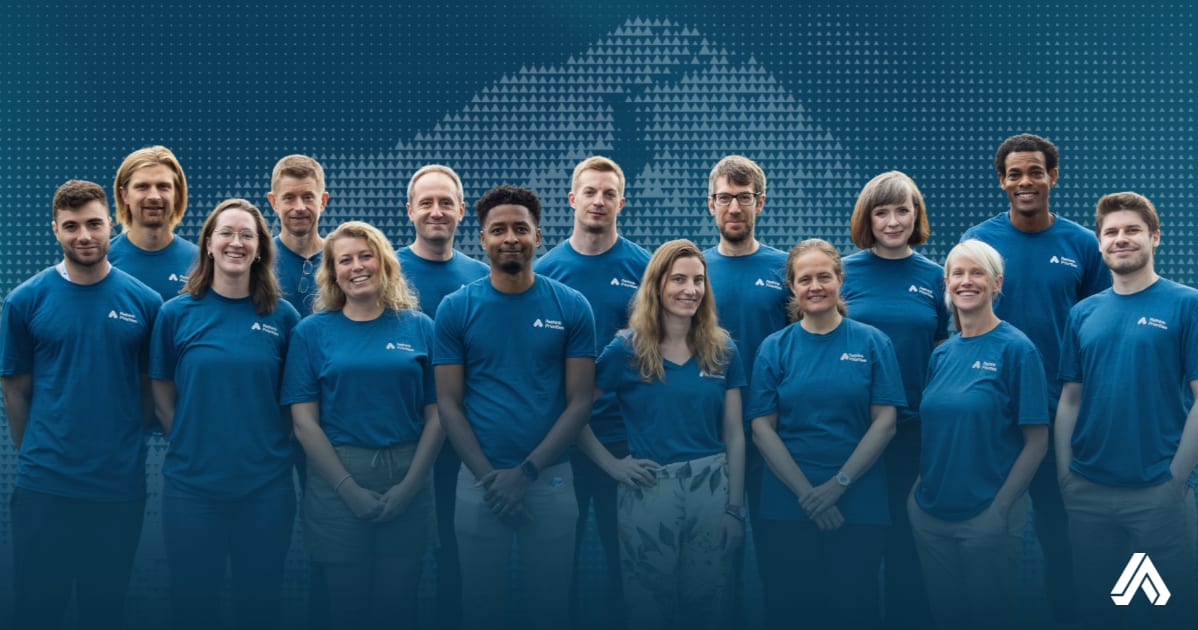
- Between now and the end of the year, 20+ RP staff will have participated in the CCF project in some capacity. We hired 7 over the past 3 months.
- Staff members are involved in varying capacities:
- 12 staff members are working roughly full-time on it, one of whom joins next month
- 8 staff members work part-time to varying degrees.
- The team consists of many experts in their domains (we introduce them below, so you can meet the people behind the work)
- This project is continuously evolving, and we will assign work according to team members’ strengths and the project's needs. Below we list each project member’s current main contributions, but those are not exhaustive and will likely change in the future.
Project leadership and Coordination
What they work on: Setting the CCF’s strategy. Ensuring the model and Fund’s overall soundness, quality, and operational efficiency. Coordinating the team.
- Marcus A. Davis, CEO: Links the team to funders' needs and provides a final set of eyes on all aspects of the model, specializing in worldviews and the model's philosophical layers, with high-level responsibility for final model allocations. Marcus co-founded RP with Peter Wildeford in 2018. He also co-founded Charity Entrepreneurship and Charity Science Health.
- David Moss, Principal Research Director: Responsible for setting the methodological direction of the model’s improvements and development, finding the best ways to allocate resources, and supporting our public communication. Also leading expert consultations to gather empirical and normative inputs for the model. Outside of RP, David is also an academic researcher of moral psychology.
- Carmen van Schoubroeck, Head of Executive Office: Leads the project and is responsible for building the CCF team, day-to-day project management, and the model's high-level methodology and end product. Carmen is a mathematician with 8 years of experience in research and project management.
- Lisette Reuvers, Project Coordinator (part-time contributor): Supports Carmen in coordinating work across CCF projects and collaborators. Lisette spent the previous six years advising the Dutch government, after coordinating labor-market inclusion projects at a social enterprise.
Philosophy & modeling team
What they work on: Building the philosophical backbone of the model, i.e., how to translate different moral theories into a quantitative model, and later aggregating them.
- Prof. Hayley Clatterbuck, Senior Research Manager, Worldview Investigations team (part-time contributor): Ensures the soundness of the model’s philosophical aspects, brings institutional memory, and supports public communication of the model’s make-up. Outside of RP, Hayley is a visiting Professor of Philosophy at UCLA.
- Jim Buhler, Senior Researcher: Contributes to the continuous improvement of the model's philosophical aspects (distinction between worldviews, implications of worldviews). Jim is also a PhD candidate in Philosophy at the University of Santiago de Compostela, where he has been researching the case for deep uncertainty about long-term effects and cross-species moral weights, as well as its potential implications.
- Evelyn Morris, Senior Researcher: Focuses on strengthening the model's quantitative backbone. Before joining our team, Evelyn was an Analytics Manager at the University of Chicago’s Crime and Education Labs.
- Laura Muresianu (née Duffy), Senior Researcher: Contributes to empirical cost-effectiveness data modeling. Laura previously served in executive support roles at Rethink Priorities and as a policy analyst at the Progressive Policy Institute.
- Stanley Pinsent, Senior Researcher: (starting with us soon) – leading the model's scientific communication and contributing to cost-effectiveness evaluations of climate interventions. Stan has extensive experience in applied climate research at Founders Pledge and grantmaking at the Center for Exploratory Altruism Research (CEARCH).
- Prof. Harry Lloyd, Aggregation Methods consultant: provides expert counsel and research into moral philosophy topics, aggregation methods in particular. Harry is also an Assistant Professor of Philosophy at UNC Chapel Hill.
Monitoring and evaluation and cost-effectiveness team
Their mission: To produce a principled framework for fund inclusion and to evaluate potential additional funds.
- Dr. Vahit Kutluer, Measurement and Evaluation Manager: Leads efforts to ensure a principled inclusion framework for new beneficiary funds and rigorous measurement and evaluation of the Cross-Cause Fund’s allocation activities. Vahit is a seasoned monitoring and evaluation expert, previously holding leadership roles in research at Save the Children International and Prosper Global (formerly Mercy Corps).
- Dr. Benjamin Tereick, Senior Researcher: Works on the continuous improvement of the CCF’s Measurement and Evaluation and will contribute to expert consultation. Previously, Benjamin was a grantmaker on Coefficient Giving’s Forecasting Fund and a postdoctoral researcher at the Global Priorities Institute at the University of Oxford.
Prospective
Their goal: finding new funds and potentially new cost-effective interventions outside of cause areas commonly included by EA.
- Dr. James Elsey, Senior Research Advisor: Leads interdisciplinary research on including funds in new cause areas. Jamie has an academic background in clinical psychology and neuroscience, and has since worked at RP conducting public-opinion research on effective giving and AI risk, as well as conducting cost-effectiveness analyses.
- Jon Temin, Research Lead for Democratic Resilience: Provides expertise on Democratic Resilience as a cause area. Jon previously held senior positions at Freedom House, the US Institute of Peace, and the US Department of State, and is a Visiting Fellow at the SNF Agora Institute at Johns Hopkins University.
Communications and outreach
Their goal: Ensure that we communicate about our work effectively, and build a network among impact-minded people, enabling us to gather feedback and ensuring the work is decision-relevant.
- Jonathan Nelson, Head of Communications and Development: Jonathan leads the CCF’s engagement strategy. Before joining RP, Jonathan spent eight years at Alto Intelligence, most recently as Director of Risk Intelligence, working with global health and development philanthropies, governments, and multilaterals.
- Angela Aristizabal, Cross-Cause Fund's External Engagement Lead: Angela leads our external engagement efforts. Angela brings experience in talent pipelines in AI safety and animal welfare, including as a Research Scholar at the University of Oxford's Future of Humanity Institute.
This work is supported by our Outreach and Communications team, alongside their other RP work: Dr. Urszula Zarosa (Senior Communications Manager, content strategy and pipelines), Elisa Autric (Communications Officer, PR and editorial), and Maja Nenadov Webster (Communications Specialist, marketing and design).
The overall CCF project also depends on valuable input and feedback from Rethink Priorities' Global Health and Development, Animal Welfare, AI Strategy, AI Cognition Initiative, and Worldview Investigations departments, as well as the research these departments produce. In particular, we have sought and will continue to rely on feedback from Dr. Abbie Claire (Interim Director, GHD), Prof. Bob Fischer (Senior Research Manager, Worldview Investigations), and Samuel Hilton (Acting Director, AW).
Expert and community consultation
In addition to our own staff, we are proactively sourcing input or feedback from external experts and current or potential users of our cross-cause prioritization tools, including:
- Experts on each of the sub-components of the Cross-Cause Fund, for example: normative ethicists; risk experts (in economics, decision theory, philosophy of risk) and empirical experts on specific inputs to the model
- Potential and current donors to the Cross-Cause Fund
- EA community leaders
- Beneficiary funds themselves
- Other funders in the space
We ask for these stakeholders’ input (via interviews and surveys):
- To produce combined stakeholder values for some of our model’s inputs (see our point above)
- To inform the structure of the model
- To ensure the CCF remains a high-quality and decision-relevant tool
Let us know your thoughts!
We want to emphasize that this project is, and will remain, a work in progress. There is no clear-cut, easy way to model complex decision-making like cross-cause prioritization. Yet we believe that investing in improving this tool is more important than ever for the philanthropic and EA communities, as they face a major influx of funding.
We hope you'll join us in this endeavor. If you have any questions or comments, we'd love to hear them. Feel free to share them in the comments or via email at ccf[at]rethinkpriorities[dot]org.
We’re especially interested in your thoughts on:
(1) Of the improvements listed, which matters most to you, and is anything missing?
(2) What would need to change before you'd use the CCF, or recommend it to someone?
(3) Where do you think the model is most likely to be wrong?
We greatly appreciate your help in building the best possible version of the Cross-Cause model and Fund!
Acknowledgments
This post was written by Elisa Autric with input from Urszula Zarosa and Carmen van Schoubroeck. Thank you to Marcus Davis, David Moss, Lisette Reuvers, Jim Buhler, Jonathan Nelson, Hayley Clatterbuck, and Jamie Elsey for helpful feedback. The plans and ambitions described here were developed by the CCF leadership and research teams. To learn more about our cross-cause prioritization work, follow this sequence here or on our Substack.
Parts of this content were prepared with the assistance of AI tools (such as Claude and Gemini), which we use to improve efficiency and readability. All outputs are supervised, reviewed, and fact-checked by RP staff, who remain responsible for the final content.