
Quick takes
I think the sex stuff (can't believe it's still being discussed on X) is a large part of the appeal for many active in EA. I don't mean that many encounter it primarily for sex (anecdotally, don't know the data on this, it seems to be 80k hours events at universities that attract people), yet it's a signal of a community willing to question the merits of dogma. Much of the appeal of EA, and utilitarian frameworks more broadly, is precisely in resisting socially dominant superstitions that are not backed by reason. I feel more comfortable in a community that accepts polycules than shuns it. I think many of us think the same too.
All too often, I see people reject societal norms as "socially dominant superstitions" only to later find out that those norms were there for a damn good reason. I might point here to SBF's maverick way of running a business, that later turned out to be a symptom of widescale fraud. A similarly cavalier attitude toward sexual norms can cause real harm. I have no issue with polyamory or orgies or whatever is going on in principle, but combine it with conflicts of interests and large power imbalances and things can go pretty badly.
Tentative thesis: China is unlikely to accept a subordinate position in AI capabilities to the US, just as the US is unlikely to accept a subordinate position in AI capabilities to China or anyone else.
This thesis suggests that there are two likely paths for the future international AI (non)regulation:
1) a continuing race between the US and China, perhaps joined by some late entrants, possibly with some rules established (e.g. mutual ban on autonomous weapons or something like that), or
2) a “pause or stop deal” that will establish some sort of ceilin...
EA is facing its most serious PR crisis in history, and nobody in EA seems to be discussing it or doing anything effective about it. Everyone seems to be carrying on as if this is business as usual.
President Donald Trump, AI Czar David Sacks, and the Department of War have launched a coordinated campaign in the last week to portray EA as treasonous and toxic.
Their campaign motto is 'Americanism, not Effective Altruism'. Tens of thousands of MAGA political influencers are attacking EA (often from positions of total ignorance) on social media platforms such...
Will anyone take the other side of this bet? By January 1, 2034, the New York Times, Wall Street Journal, Financial Times, and Bloomberg will all agree the AI bubble has popped. (As in, they will all report it as news, not just publish an opinion column saying so.)
The stakes: $20 to the charity of the winner's choice.
Why this bet? Mainly just for fun. But also to make a point.
I chose 7 years as the time horizon for the bet because I read that 5 to 7 years is the time horizon for many AI investments.
My hunch is that the AI bubble will pop within 3 years, but who knows. Markets can keep lending and investing in unprofitable ventures for a very long time.
Some quick observations on the attacks on METR, EA, and other AI safety orgs (from my perspective as a political campaigner and former Communications Director for a union and mayor during COVID):
- If you're explaining, you're losing: Every rebuttal repeats the accusation to people who haven't heard it yet. Answer the accusation once, link to it, and stop explaining. This is the "illusory truth" effect (information is true when it's repeated).
- Silence doesn't work either: Not responding on the record suggests something is being hidden. Make one clear statement
Thinking aloud here. I don't think you necessarily have to respond by quoting the person. You can just provide a frame or facts which counter or inoculate against whatever critiques are currently widespread. E.g. if someone accuses you of a crime, you can mention that you were someplace else at the time the crime was committed, without directly repeating the criminal accusation. However, your X replies might fill with accusation talk in that case.
There should be more ongoing debate about whether it's good or not to call oneself an EA; I haven't seen many posts myself. We should try to think through all the pros and cons.
It probably depends on who you are and the career you want to have, but for some reason it feels like most people think it's bad in most cases.
Even if you disagree with some subgroups or like to have a small identity, it could be bad for the world that most EA-adjacents don't call themselves EAs.
Over time, it could make some of them less effective or altruistic. It could also allo...
The way Northern Virginia outshines all the other top ten data centre markets is quite extraordinary. It also points to the concentrated nature of the AI boom and how it has various chokepoints that are vulnerable to quite high probability political shifts
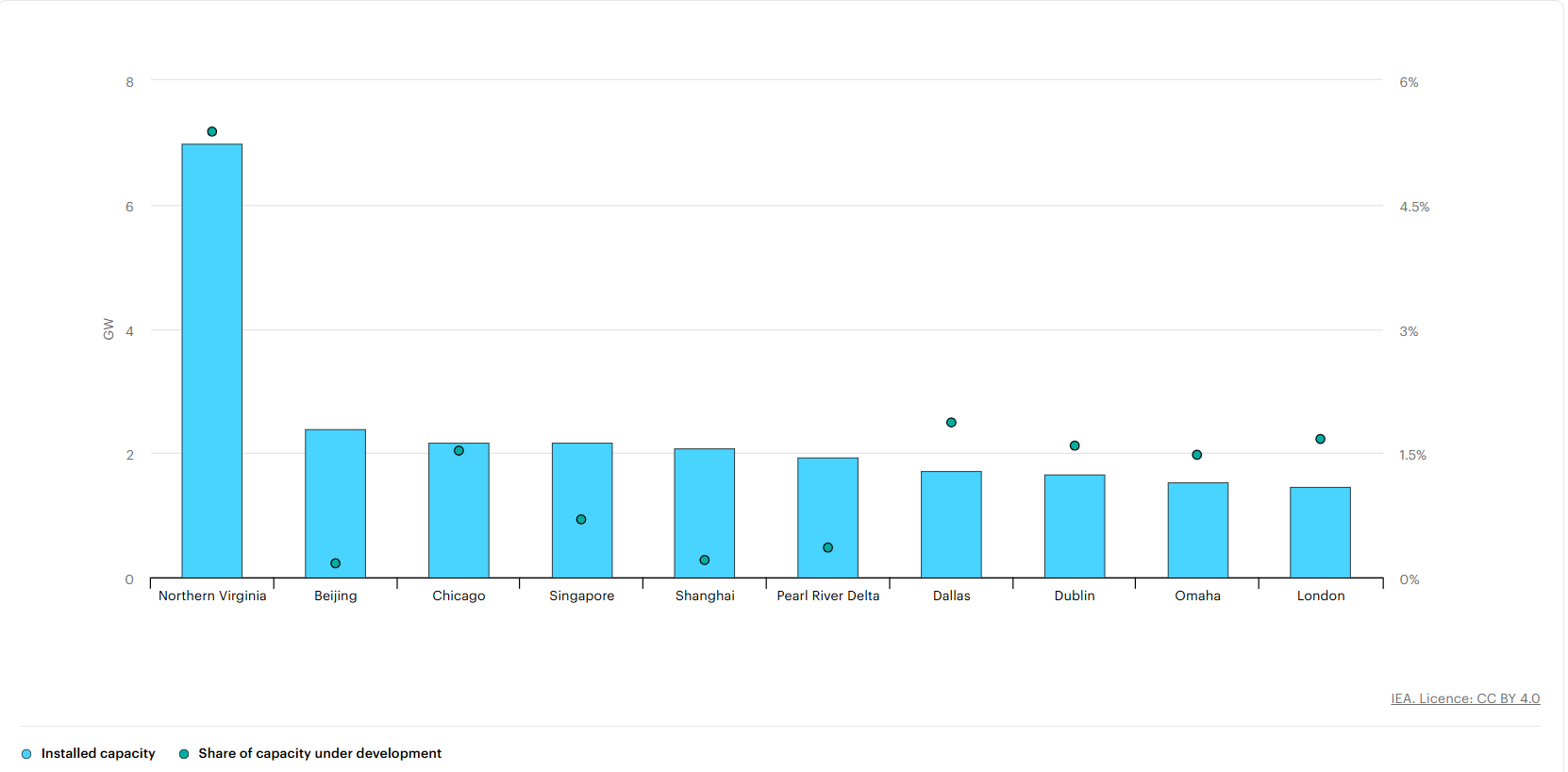
https://www.iea.org/data-and-statistics/charts/top-ten-data-centre-markets-by-installed-capacity-versus-share-of-capacity-under-development-2024
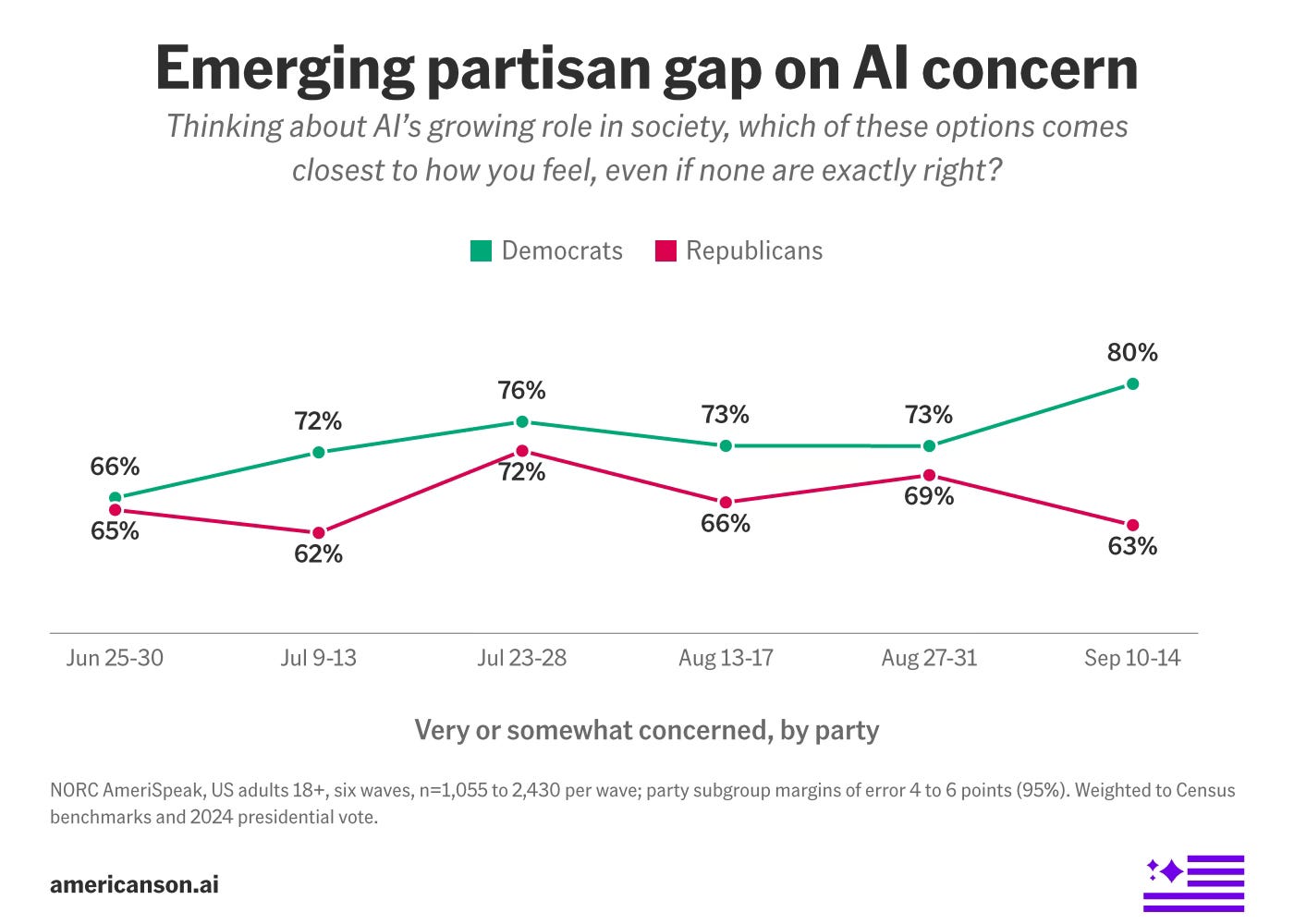
Post Coxon-resignation, polls on the American general public suggest (1) more Americans than ever are prioritising AI harms and (2) there's an emerging partisan gap in concern about AI, though a gap is not new among 'very concerned' Americans.
On (1), compared to the same survey two weeks BC (Before Coxon), there was a significant jump in the number of Americans saying “AI harms” should be a top priority for government: AI harms as a top priority increased from 36% to 43% (+7 points). Overall, 80% of Americans now say “AI harms” should be a priority for th...
I'm not convinced the recent capabilities advancements (highly concentrated in pure math, the section which by definition can't be applied) support the forecasts that misaligned superintelligence is on balance harmful. In general, I think there is not enough evidence to draw the conclusion that multi-agent alignment (which was far from inevitable ex-ante in comparison to the sometimes monotheist conceptions of ASI) is impossible, especially with AI eventually automating and enforcing the institutional mechanisms.
However, this is not guaranteed either. The...
As many people have remarked, the AI race is also swiftly turning into an electrification race. The recent Electrification Special Report from the IEA provides interesting data on this. Amongst others, it shows how AI usage, to a large extent dominated by American models, will be powered by a supply chain in which Chinese firms play a predominant role, European an intermediate one and North American a subordinate one. This is from page 137 of the report: 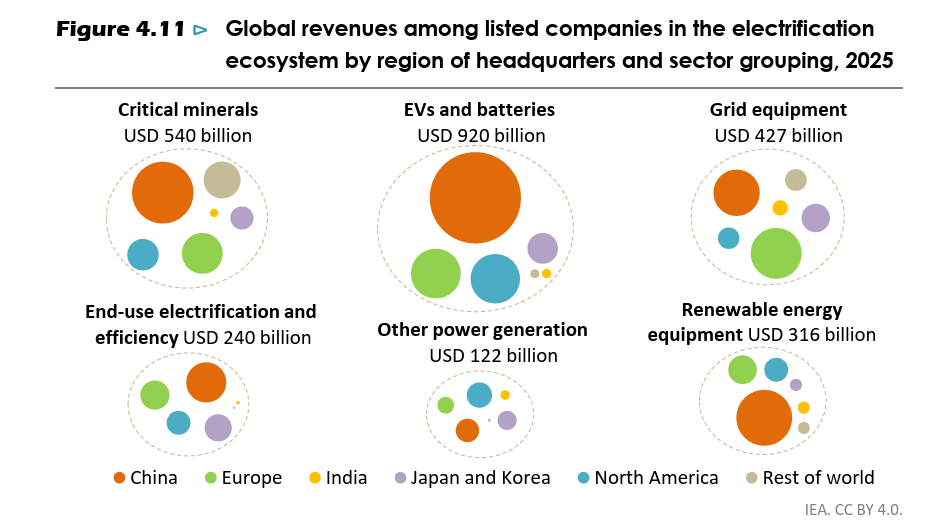
Why do I keep meeting so many damned capabilities researchers and AI salespeople?
I thought that we agreed capabilities research was really bad. I thought we agreed that increasing the amount of economic activity in capabiliities was really bad. To me it seems like the single worst thing that I could even do!
This really seems like a pretty consensus view among EA orthodoxy. So why do I keep meeting so many people who, as far as I can tell, are doing the single worst thing that it's even in their power to do? If there is any legal thing that coul...
With the large expected inflow of philanthropic capital, there has been a surge in interest in entrepreneurship among those who otherwise might not have pursued it. As we pursue promising new ideas, many ventures will fail. Some of these failures will be because the idea was not as good as it seemed, but many will fail because the entrepreneurs executed it poorly.
I'm concerned we will abandon good ideas due to poor execution.
Founders new and old should strive to make their successes and failures publicly visible (though these stories should be read critica...
I thought Ezra's feature on recursive self-improvement was really valuable in a number of ways:
- Generally well-done pedagogically, explaining things in a way that non AI-pilled people can understand and doing a lot of preemptive objection-handling.
- Making the case that many of the beliefs about x-risks were held for a decade plus, before people involved had the material interests they have now.
- Explaining well why the perceptions of AI risks diverge between people at the frontier and everyday people using ChatGPT to improve emails.
- Explaining why recursiv
Rather than total installed GW’s, it is much more useful to look at data centre installed capacity as a share of regional average power demand to reveal where political strains of the AI build-out are likely to appear first. Helpfully, the IAE provides these statistics: https://www.iea.org/data-and-statistics/data-tools/energy-and-ai-observatory?tab=Energy+for+AI 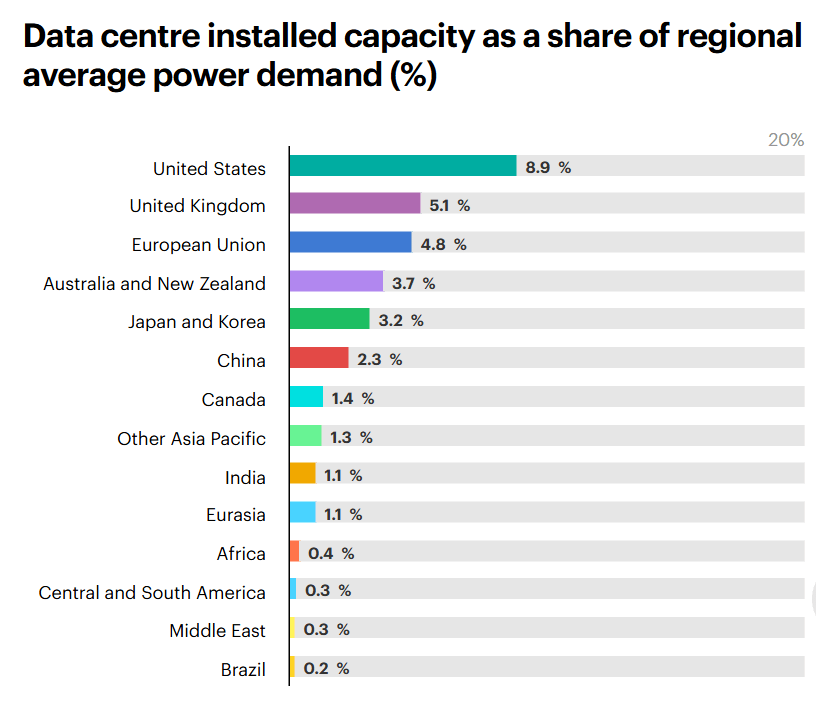
The "Desperate" AI Safety Talent Bottleneck is deeply misleading. Please.stop.
I worked at Google.
Google does not tell applicants that there is a talent bottleneck and they are desperately hiring. They say "we're cool, join us!"
I didn't get into Harvard.
Harvard does not tell applicants that they are desperately seeking students. I am not misled.
I've gotten rejected from countless AI Safety organizations.
AI Safety tells applicants - we are in desperate need of talent (operators/generalists)! Please join us!
I've coached 70+ aspiring career pivoters on nav...
To add to that comparison: Google invests into actively helping the applicants get in. They:
- Have a standardized recruitment process that applicants can prepare for ahead of time
- Point at resources which can be used to prepare
- Offer mock interviews
- Offer a grade of sorts, even to failing candidates (e.g. "Your interviews would put you at L5 level but right now we are looking for L6+")
- Offer detailed feedback
- Actively reach out to past candidates
This is based on my experiences with Google in Europe, might not generalize to the US. At the same time I'd expect Europe to be more talent-constrained, i.e. closer to the realities of the AI Safety ecosystem.
I started a series on organizations working on burning problems that are also unusually good at growth, and what programs can learn from them. First one is Climatebase.
Some numbers: their newsletter grew from about 7,000 subscribers in 2021 to 150,000 in 2026. The fellowship, launched in 2022, has had 15,000+ applicants over its first seven cohorts and 4,500 alumni to date, accepting roughly one in five, at $1,990 a seat. Cohorts grew from about 450 to about 650 at the same price. Many free, funded programs struggle to fill at a fraction of that size.
I tri...
Stuff I tell student organizers: Do more meta communication.
Represent the range of views that are in your group. If some people in your student group think “do the normal thing in university and explore your career options” and others think “drop out to urgently work on 2-person AI safety projects," represent to your group members that those are both views held in your group.
If you always serve vegan food, people will assume all EAs are vegan / you’re supposed to be vegan if you’re in EA. I suggest saying something like “We serve vegan food because that’s ...
Ok, I take your point to be that in any area where reasonable EAs may disagree, we should make sure to flag that (which is probably most topics tbh)!
I would agree with that, and maybe the risks you're flagging just don't seem that serious to me because the groups I've been part of always have made that diversity clear 🤔
Could AI alignment be a “major evolutionary transition” problem?
One idea I've been exploring: evolutionary biology has a framework for how independent entities become parts of a higher-level system—cells becoming organisms, individuals becoming eusocial colonies, etc.
A recurring challenge is that the interests of the lower-level components don't automatically align with the interests of the new whole. Cancer is an extreme example: a cell can become very successful at optimizing its own replication while harming the organism it depends on.
It makes me wonder...